Skip to main page content

Intelligent BPM solution in the financial sector

bpm cover

Robust digitization strategy

Internationally recognized as the “Most Innovative Bank in Portugal 2016”, “Best Digital Bank Portugal 2016” and “Best New Internet Bank in Portugal 2016”, the BNI Europe – financial institution that operates in private and retail banking in Portugal and Angola-, wanted a digitally advanced solution and an agile implementation.

For LBC, this involved the implementation of a reliable and easy-to-use BPM – Business Process Management platform, with the ability to incrementally incorporate robotic process automation and artificial intelligence. LBC has also developed processes to engage and get BPM buy-in from bank employees and technology departments so that they become autonomous later on.

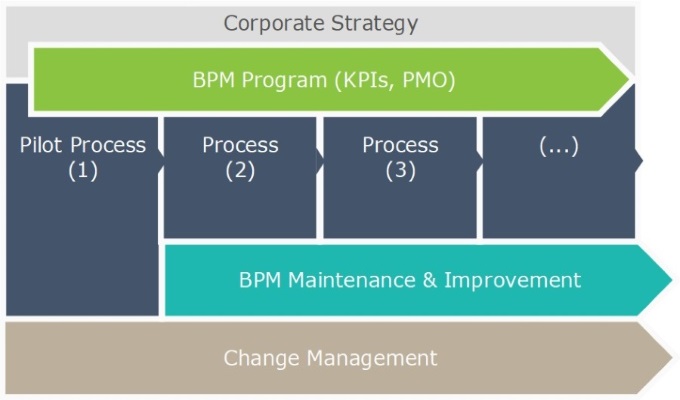
The project was integrated into a robust digitization strategy, focused on a strategic vision, a BPM program with clear KPIs, and pragmatic implementation of various digitization processes, selected according to specific criteria.

solucao bpm 2

Automate and improve

LBC selected Genpact’s Cora Sequence BPM platform, which was a key factor in its success due to its technological reliability, development flexibility and easy-to-implement and easy-to-use features.

The digital transformation framework developed by LBC and the Cora Sequence platform allowed the bank to automate and improve five administrative processes in a few weeks, adding auditing, monitoring and reporting capabilities.

Due to the characteristics of the platform and the methodology used, the bank’s team managed to integrate the developed process into daily operations and quickly create their own business processes.

According to Ruben Simões, head of the IT department at BNI Europa, LBC’s approach and the Cora Sequence platform “allowed us to automate and improve administrative processes very quickly in the space of a few weeks and without operational disruption”.

Mike O’Donoghue, vice president of global partnerships & alliances at Genpact, adds that “LBC ensures continuous value-added services to our clients”.

LBC’s methodologies and tools help businesses and the public sector successfully digitize with low operational stress.


Alignment of information systems with the business

portal solidariedade social

Alignment difficulty

Since the introduction of information systems in organizations, their conception and development have been negatively affected by the difficulty in aligning the needs and semantics of the business areas and the functioning and semantics of the technological support areas. This is because the business context is described in terms of resources, processes, activities, objectives and responsibilities, whereas the technology context is described in terms of software components, entities, data structures and interfaces.

The difficulty in establishing a direct correspondence between the concepts of the business and those of the systems is often responsible for the incorrect transposition of the business needs – the requirements – into the design of the architecture of the information systems to be implemented. This is one of the main factors for the low quality of many information systems or even for their failure.

Several studies point to an average success rate that does not exceed 40% in software implementation projects, with a direct correlation of this situation with the incorrect identification of requirements, whose main causes are identified:

  1.    If, on the one hand, the technological areas of organizations do not understand the business areas, on the other hand, these only know the business context and do not realize the potential of technologies and how they can contribute to leverage their activities;
  2.    Communicating requirements is difficult, non-intuitive, and subject to the filters of individual perception and language;
  3.    The formal and precise identification of requirements does not exist, or is carried out informally, without resorting to structured documentation, free of ambiguities, understandable and accepted by all parties participating in the projects;
  4.    The definition of priorities between requirements does not exist, with equal degrees of importance being assigned to all of them, making it impossible to identify critical requirements and optimize the resources used;
  5.    The main software development methodologies are very oriented to programming paradigms and not to business needs, contributing to increase the gap between the final product and business needs.

New proven methodology

To overcome these limitations, standardizing the semantics and systematizing the terminology used in the description of requirements, tools are used to analyze and characterize each of the organizational dimensions with implications for the identification of requirements. Thus, in the Strategy dimension, among others, the Vision, the Strategic Map and the Value Chain are used. For the description of the Business Processes, Flowcharts and Hierarchy Diagrams of Rules and Activities are used.

As for the description of the Information Systems, among others, Use Cases, Data Models and description of the Systems Architecture are used. The use of these tools increases the fluidity of communication between the business areas and the requirements gathering areas, ensuring the reduction of inaccuracies and ambiguities.

In turn, ensuring the alignment between the tools in each of the dimensions ensures that the identified information is necessary and sufficient for the specification of requirements to be carried out rigorously.

The set of activities that contribute directly to the design, implementation and exploitation of a software product, constitutes what is called the software process, also known as the software development cycle. It is the means and tools used during the execution of the activities of this cycle that ensure the suitability of the final product to the needs of the business areas. Although there are different models to systematize this process, the main steps are Requirements Gathering and Solution Design, Solution Implementation, and Solution Exploration, represented in the figure below.

The most critical step in creating software is Requirements Gathering and Solution Design. This is the moment when the behavior that the software to be developed should have is described, so that it is in accordance with the business needs that are identified. All information collected in this stage will be used as input for the following stages, so any error or omission generated at this stage will be transmitted – normally amplified – to the following links. work carried out in this first stage must be carried out in accordance with best practices and using the appropriate tools to systematize information, ensuring the full collection of business needs and the elimination of ambiguities and contradictions.

Increase the degree of success

Sonangol’s information technology area, attentive to its internal and external surroundings, identified the need to increase the degree of success in adapting the information systems developed in response to requests from the business areas.

In an environment of increased demand, it decided to put into practice an ongoing strategy to narrow the existing “gap” with the business areas.
For this purpose, Sonangol initiated a series of actions to increase the qualification level of the Information Systems Requirements Survey teams, providing them with the necessary skills to overcome existing barriers with the business areas.

It was in this context that Sonangol found in LBC a partner to support it in the creation and implementation of new approaches to fulfill these objectives. The project team conceived and developed an innovative program by incorporating the training aspect into a project, in a training-action logic, which allowed Sonangol to learn and apply the processes, techniques and tools of Requirements Survey and Solution Design that allowed it to increase the degree of autonomy in this discipline.

skills development

A training-action methodology was defined in two phases. The first phase consisted of training Human Resources in the Requirements Gathering area and creating tools to support the activity. The second phase was related to face-to-face support, on-the-job, to the members of the team responsible for carrying out the Requirements Gathering project.

The objective was not limited to developing technical skills, identifying the intended functional and non-functional requirements for the system, but also aimed to develop human interaction skills with the business areas, improving the capabilities of dialogue with users, in their language , identifying their real needs and supporting them in identifying needs that had not been recognized.

A joint project team was set up, led by Sonangol and including elements from LBC, to guarantee access to methodologies, experience and fundamental practices for the success of information systems design projects. The creation of a joint team also allowed Sonangol to ensure the incorporation of know-how by the members of the Requirements Survey and Solution Design team.

Additionally, to materialize these practices and ensure the permanence of know-how in Sonangol after the completion of the project, tools were created for analyzing and characterizing information in the organizational dimensions of Business Processes and Information Systems. The existence of these tools ensures alignment between the semantics of the business areas and information systems, standardizing the terminology to be used in the description of requirements.


 

Boost HR in the Angolan energy sector

potenciar rh energetico

Framework

For the manager of a hydroelectric dam, it was crucial that the workers had the proper framework in accordance with the level of professional training required for each job; that professional careers were in accordance with the required needs and skills; that forms and requirements for horizontal and vertical progression in careers be established; that a performance evaluation system be instituted, as well as a system that would allow the enhancement of employee training in the respective areas; and that a fair remuneration system be established that encourages high-level performance.

The project developed by LBC, strategic and restructuring, and lasting 10 weeks, involved the design and implementation of a new model for managing professional careers, remuneration and benefits, as well as a performance assessment system suited to the challenges of the consortium and promoter of an internal motivation dynamic to increase performance and employee satisfaction. To this end, LBC reviewed the entity’s HR management model, including the performance assessment system, the career plan, incentives and professional development, the integrated remuneration and compensation system, as well as the training and its implementation.

The various activities carried out by LBC included interviews with company officials (board of directors, directors and/or senior management and other key elements); the identification and analysis of reference practices in Angola and abroad; or the analysis of possible flaws in HR management policies/tools in the face of challenges, in order to then establish guidelines for the project.

new structure

In order to qualify the functions, for example, LBC presented a new structure (with the respective descriptions), as well as the hierarchy, having also elaborated the remuneration and benefits policy. Here, the remuneration policy aimed not only to allow the company to reinforce its position as an attractive entity in terms of salaries (allowing the creation of conditions to attract and retain talent), but also to guarantee the sustainability of the business. The remuneration manual was complemented with policies for salary update and benefits package. A training plan for a period of three years was also drawn up.

The work plan proposed by LBC covered six weeks of intensive work that allowed the established objectives to be fulfilled. In the first week, the diagnosis was made; between the second and the 10th, the design phase took place, with a set of results relating to each phase. Completing the project within the established deadline involved strong work dynamics and an active intervention by the company’s HR management team.


5-year business plan to energize an African power plant

plano 5 anos

fine tune areas

In this particular case, the project carried out by LBC is the perfect example of how fine-tuning some areas, such as the technological aspect, can make a difference.

The plan designed by LBC included financial projections of revenues and costs, as well as the main key indicators of ENE’s activity; strategic positioning in the energy sector in the market, namely in terms of the company’s model and participation in the various areas of the value chain; or the entity’s ambition for the five-year period, translated into objectives and targets.

Opportunities

Among the opportunities for improvement identified was the legalization of fraudulent connections and the expansion of programs to attract new customers; the expansion of the network to serve parks and industrial centers, as well as investment in the modernization of the network in order to make up for technical losses and allow the company to sell the energy it already produced; o move forward with a meter installation program (especially prepaid), reducing bad collection and the costs associated with the act of collecting; reducing waste, achieving significant savings on third-party supplies and services or making the most of existing assets; or even the revision of the tariff charged, in favor of the efficiency of the energy market and in order to create incentives for attracting new customers and for making investments in the network.

Recommendations

With regard to value creation initiatives, customer acquisition campaigns were recommended, in order to increase the customer base (installing 75% of conventional meters and 25% of prepaid), in a projected increase of almost 300 thousand customers between 2011 and 2015, an average of 55 thousand new customers/year; customer legalization actions, with an estimated increase of 25 thousand customers in the same period, an average of 5 thousand new customers/year; or the monthly sending of SMS alerts to customers without a metering system (with a total margin estimated at 14,8 million kwanzas, corresponding to incremental revenue of 24,9 million kwanzas and costs of 15,7 million kwanzas).

On the technological front, the recommendations for ENE to generate value indicated initiatives with an impact on revenues, such as payment via multi-cashier (ATM) by customers, with a total margin estimated at 44,1 million kwanzas; the implementation of the SMS payment service, with a total margin estimated at 122,7 million kwanzas; or the creation of alternative payment points, giving ENE an estimated value of 77 million kwanzas by 2015.

These recommendations, added to those for savings and cost reduction, pointed to an estimated cash flow of AZ 385.515 million for ENE – Empresa Nacional de Electricidade de Angola.


Leadership in action in education in Angola

lideranca educacao angola

Measure

The Leadership in Action program was customized to the needs of the Angolan Ministry of Education, which identified the critical skills to be developed for its national directors over the course of eight days. This consisted of an initial assessment of leadership skills, followed by skills training taking into account the specificities of public administration, namely the management of innovation and change, strategy, planning and monitoring, management of high performance teams, project management, delegation and accountability, finance to non-financial, among others. The program concluded with a diploma delivery ceremony, attended by the Angolan Secretary of State for Education, and to which some media were invited.

Cost reduction and inefficiencies

Leadership in Action was an innovative project that gave rise to another program, aimed at Ministry department heads, and again customized according to the specific needs of the participants. This second Leadership in Action had more operational modules, focused on people management, emotional intelligence, change management, archival and document management, among others.

With Leadership in Action, the Ministry of Education of Angola standardized leadership and management styles among its directors and reduced costs and inefficiencies. And, at the same time, it mobilized national directors and heads of departments from all parts of Angola to participate in the programme, thus disseminating the skills learned across different parts of the country.


Information shared by all in a single portal

unico portal

Implementation

LBC collaborated with the company in the design, development and implementation of the project.

It was defined that the intranet aspect functions as a repository of information from all areas (forms, templates, rules and procedures, reception and security data, contact list, corporate calendar, news, notices, announcements, etc.); that on the employee’s portal they can consult their profile, work shift, salary statement, medical guides; request vacations, justify absences, etc.; and on the website of the various directorates they have information regarding their processes, working methods, documents, management calendar, etc.

quality increase

Each aspect of the portal added a set of basic functionalities that were implemented using the Microsoft Sharepoint 2013 framework, and had the contribution of all the company’s departments (who played a fundamental role in facilitating access to information, contributing to the design of websites).

The portal increased the quality of information shared by users, providing channels of communication and interaction with employees, while giving access to data and documents, automating processes such as requests for vacations or justifications for absences (it should be noted that, for the features of Resources Humans, there was a need for integration between Sequence Kinetics and SAP). And the company was left with a platform in production that incorporates not only all the requirements defined within the scope of the project, but also others that emerged during the implementation.


IT solution to manage an Angolan housing cooperative

solucao habitacional angolana

Integration and training

The motto of the solution was to obtain a global and integrated view of the operation of the cooperative, as well as interaction with various agents. This involved identifying the functionalities to be developed for the computer system and for the website; development of the cooperative’s system and website with the identified functionalities; testing the developed systems and uploading the initial contents (presentations, reports, studies, maps, photos, etc.) in Portuguese; as well as training and support to users in the initial exploration of the developed systems; and also the parameterization and availability of the electronic mail system.

Training and monitoring

The project, which lasted ten weeks, covered, for example, the collection and preparation of content, as well as training for the cooperative’s employees and their follow-up (in the sense of having autonomy in managing and publishing content in a different way depending on the of profiles).


Fine-tune the credit granting process

credito entidade angolana

Less room for error

The step taken was to choose Sequence as the application of rigorous and careful analysis to requests for credit guarantees. And LBC was chosen to develop and implement the process – through the business unit dedicated to information technologies, LBC certified partner in Sequence by the Israeli PNMsoft, creator of the software and gold partner of Microsoft –, work that was carried out in the space of a month.

Among the advantages of this project is standardization – using Sequence allows credit guarantee assessment processes to be analyzed according to defined criteria, with less room for subjectivity or errors; organization, speed and security – processes are registered and can be accessed more quickly and easily, ensuring that each user only accesses what is their responsibility; monitoring – effective control of credit guarantee evaluation processes is fundamental for successful management and decision-making, so it is possible, through the reports produced, to understand at any time the status of the portfolio of guarantees granted and, in this way, assist management at any time; continuous optimization – Sequence has a series of indicators to measure the degree of effectiveness and make improvements in aspects considered critical, at any time, without loss of information; the alarm system and integration with the portal and Outlook ensure that information does not go unnoticed, and is complemented with a series of standardized email messages for different situations.

Increased control

Sequence assessment therefore aims to analyze, qualitatively and quantitatively, requests for credit guarantees, supporting approval or disapproval by the credit committee. This process allowed the average time to evaluate a credit guarantee request to be reduced from one week to three hours; made it possible to standardize the evaluation of requests (via the parameterization of the system with various functions and conditions); increased approval control from the entry of the request to the final decision by the committee, by sending alerts, access to progress reports for each process and also general statistical graphs.

Once the project carried out by LBC was completed, the fund began to register around 100 processes per month in Sequence, and to have access to a set of indicators (such as the downtime of processes in each person responsible or the number of approvals , not approved and pending), and there are also other automatic reports developed as they include information such as guarantees issued per month, by bank, by sector and by province of Angola. Furthermore: any of these reports can be filtered with additional information contained in the processes.