Skip to main page content

Create business value through innovation

criar valor inovacao

Business ideas and pitching

The five-day initiative carried out by LBC, which involved 40 staff from the organization (divided into groups and then together), featured value creation forums (exercises for generating and evaluating business and pitching ideas) based on the NABC method – Need, Approach, Benefit and Competition, in the Canvas model and in the Elevator Pitch technique.

Concepts with practical application

Participants were challenged to submit ideas with real business application to the competition. The concepts were refined until there were ten projects and, finally, the three best (in which the elements of the teams whose ideas did not pass to the next stage were welcomed and fully integrated into the groups of chosen ideas). In the end, the 40 executives responded to the challenges posed by presenting three business concepts to the executive committee, which were validated and taken into account for the future of the organization.

Instilling a culture of innovation in a major European energy company

major european energy company V2

Consolidation of the culture of innovation

In 2016, the electrical corporate university, in partnership with the internal innovation department, hired LBC to promote an event included in the group’s Strategic Innovation Program, with the main motto being the consolidation of the company’s culture of innovation, with a focus on executives, but involving younger staff in parallel.

So, with strategic innovation on the horizon, LBC designed a two-part seminar. The first, under the theme “Challenge the Status Quo”, had the participation of guest speakers, such as the specialist in design thinking and co-author of the book “The Ten Faces of Innovation“, Jonathan Littman, and the director general of COTEC Portugal – Business Association for Innovation, Jorge Portugal, in addition to the CEO of LBC, Carlos Oliveira, and two general directors of electricity. In this first part of the seminar, a speed brainstorming exercise was carried out (to generate ideas with potential for implementation in the group), and the innovation personas of each participant were identified, based on their main characteristics and an assessment developed by LBC based on in the ten faces of innovation. The second part of the seminar was dedicated to Everyday Innovation, an implementation model with a mini value creation forum (exercise for generating and evaluating business and pitching ideas) during which participants could develop the pitch of ideas generated in the previous session and define the personas necessary for its implementation.

cross pollination

At the same time, an Innovation Lab was held for younger staff, which was guided by design thinking specialist Jonathan Littman, and which took participants to the Mercado da Ribeira (food and related products in Lisbon), where, in an exercise of cross-pollination, applied the concepts transmitted previously.

The results are not immediately visible, not least because the company – which is part of the Dow Jones Sustainability Index, which distinguishes the companies in the world with the best performance in matters related to transparency, sustainability and excellence in economic, environmental and social management – ​​is treading a journey with regard to innovation. After all, innovation is done in the day-to-day of organizations. And “Challenging the Status Quo” is an essential step to make Everyday Innovation a reality.


Simplification in a subsidiary adopted by the multinational at a global level

multinacional global

Discovery

In this sense, the company hired LBC, which idealized the Simplify for Me project, to be implemented in a record period of six weeks.

In a first phase, LBC carried out an internal diagnosis with a view to identifying the imperative for change. This diagnostic phase, which covered around 60 employees of the company in Portugal, involved individual interviews with key people (at all levels of the organization), which made it possible to assess the areas with the greatest potential for improvement, as well as transversal workshops that made it possible to delving into relevant topics detected in the interviews, identifying the internal agents that facilitate change, and, finally, outlining sectoral action plans and immediate implementation.

Implementation

In the second phase of the project, the change management plan was designed, with the identification of key actions to be developed, those responsible for their dynamism, implementation deadlines and KPI (key performance indicators) of success.

The Simplify for Me concept lasted beyond the project carried out by LBC. Two years after the implementation by LBC was completed, the subsidiary continued to implement measures with a view to continuing to simplify the lives of its employees. The Portuguese subsidiary was also a forerunner in the multinational, since, more than a year later, the parent company adopted the theme “simplicity” as a motto for the entire group.


Leadership, a question of character and will – Álvarez de Mon

santiago alvarez de mon 580x250

lead and learn

For Professor Álvarez de Mon, leadership is a dynamic process that influences behavior, thoughts and feelings, releasing a flow of energy and human talent towards a common goal. In this context, leading and learning are almost synonymous verbs. Hence the importance of coaching, of the Socratic dialogue through which a person is helped to discover and use his inner value. From his intervention-dialogue with the audience present at the event, four key messages stand out, which are summarized below.

1. New leaders for new times
For this university professor at the Department of Human Resources and Organization at IESE in Madrid, PhD in Sociology and Political Sciences from the University of Salamanca, we need leaders adapted to the new business reality, which is increasingly turbulent and global. These are the right times to discover new leaders. Leaders capable of managing in uncertainty, with a more global mindset and more informed. Leaders who:

  • They are not looking for certainties, but rather the wisdom to manage in uncertainty;
  • They are committed to permanent learning, by themselves and their team, to maintain adaptability and agility in a changing world;
    they make the lucid management of mistakes that lead to learning, rather than looking for perfection that doesn’t make mistakes, doesn’t learn and doesn’t evolve;
  • They bet on creativity, which does not arise from brainstorming, but from a deeper debate that stimulates and releases the teams’ talent;
  • They ask free, challenging questions and listen to the answers;
  • They are ambitious and optimistic by nature;
  • They free talent from the orthodoxy and bureaucracy of inherited structures.

2. Character is a fundamental element of leadership
The combination of his vast professional experience as a consultant for large companies and coach of top managers with academic research, including an analysis based on the classics, leads Professor Álvarez de Mon to conclude that leadership is based on character. the great pillars that sustain permanent creation and renewal are talent and character.

Human talent, if not guided by a straight, free, enthusiastic and responsible character, is wasted. character supports the will and daily discipline that give meaning and creative productivity to talent. This character, so important for any person, but even more so for a leader, is built on the past, intimate and genuine history of each person and on the way in which that person encountered, resolved and overcame adversities.

Additionally, the idea of ​​leadership cannot and should not be stripped of its moral dimension. The goodness of the goals that motivate a leader, the values ​​associated with him – freedom, solidarity, justice, tolerance – as well as the means he employs to achieve them, give him or take away legitimacy to lead.

Professor Álvarez de Mon mentions the exemplary example of Nelson Mandela, Nobel Peace Prize and first president of post-apartheid South Africa. Despite having been in a prison designed to destroy his spirit and will, with continual attacks on his dignity, he never renounced his convictions, lost self-respect or stopped believing in a better future. Despite having every reason to be bitter and hateful, on the date of his release he showed extreme tolerance towards his jailers. The serene way in which he overcame an extremely adverse experience, how he maintained his humanity, further strengthened his character and gave him added legitimacy to lead the country in the post-apartheid period.

Character, which provides the strength and determination necessary for Action, are strategic and central virtues for top managers in an increasingly turbulent society in terms of values, changing contexts, conflicts, innovation and uncertainty .

“The little man only remembers the harm done to him. The big man remembers the good, and for that little good that he receives, he forgets so many evils that he received ”, anonymous, quoted in the book“ Desde La Adversidad ”, by Santiago Álvarez de Mon.

3. Willpower
Most companies are overloaded with plans, rules, committees, hierarchies, systems of procedures and controls that constrain talent. They lack intensity, passion, enthusiasm, imagination. When things go less well, they increase the dose of organizational tools, which are useful, but do not replace the need for leadership.

Investment in new working methods and new tools is sometimes lost due to a radical lack of interest and motivation on the part of people, bumping into apathy. the excess of logic, analysis and planning does not add anything, on the contrary. Only the will to achieve a joint vision, which has meaning for the recipients, can energize an organization. When something makes sense, when my role is relevant, when I have vital space to grow, it’s easier for curiosity and passion for work and action to take root in the corporate culture.

In this context, career plans, training plans, 360 degree assessment, coaching and training programs are important supports, but fall short of what is needed if they are not supported by effective leadership. If you offer employees a noble and attractive cause, you will be surprised by the response. For this, it is necessary to know the reality of those around you, understand them, challenge the status quo, innovate, dare to be different, trust in talent, allow mistakes, learn and celebrate together, building highly motivated teams.

4. Leadership begins with self-knowledge
The beginning of the process is self-knowledge. In the new era of knowledge, it will be individual skills that will make the difference, not just the brilliance of top management. In this context, the first step towards training and developing leaders is self-knowledge, identifying deficiencies and strengths. This is a field in which everyone, without exception, can work. In fact, the entire competence development process – something so widespread today – must be centered, as the main starting point, on one’s own knowledge.

But the key moment of leadership is action, acting on oneself first, changing oneself before changing others. Leadership has to do with each one of us’s ability to be better, not just with an innate characteristic. This leadership is not born with us, it is not studied. Practice and learn in everyday activities. It doesn’t result from a big “bang”. Living, working, we are gradually approaching or moving away from it.


Intelligent BPM solution in the financial sector

bpm cover

Robust digitization strategy

Internationally recognized as the “Most Innovative Bank in Portugal 2016”, “Best Digital Bank Portugal 2016” and “Best New Internet Bank in Portugal 2016”, the BNI Europe – financial institution that operates in private and retail banking in Portugal and Angola-, wanted a digitally advanced solution and an agile implementation.

For LBC, this involved the implementation of a reliable and easy-to-use BPM – Business Process Management platform, with the ability to incrementally incorporate robotic process automation and artificial intelligence. LBC has also developed processes to engage and get BPM buy-in from bank employees and technology departments so that they become autonomous later on.

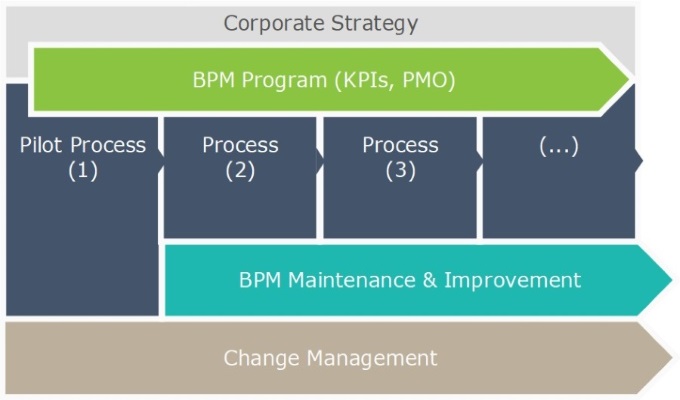
The project was integrated into a robust digitization strategy, focused on a strategic vision, a BPM program with clear KPIs, and pragmatic implementation of various digitization processes, selected according to specific criteria.

solucao bpm 2

Automate and improve

LBC selected Genpact’s Cora Sequence BPM platform, which was a key factor in its success due to its technological reliability, development flexibility and easy-to-implement and easy-to-use features.

The digital transformation framework developed by LBC and the Cora Sequence platform allowed the bank to automate and improve five administrative processes in a few weeks, adding auditing, monitoring and reporting capabilities.

Due to the characteristics of the platform and the methodology used, the bank’s team managed to integrate the developed process into daily operations and quickly create their own business processes.

According to Ruben Simões, head of the IT department at BNI Europa, LBC’s approach and the Cora Sequence platform “allowed us to automate and improve administrative processes very quickly in the space of a few weeks and without operational disruption”.

Mike O’Donoghue, vice president of global partnerships & alliances at Genpact, adds that “LBC ensures continuous value-added services to our clients”.

LBC’s methodologies and tools help businesses and the public sector successfully digitize with low operational stress.


Alignment of information systems with the business

portal solidariedade social

Alignment difficulty

Since the introduction of information systems in organizations, their conception and development have been negatively affected by the difficulty in aligning the needs and semantics of the business areas and the functioning and semantics of the technological support areas. This is because the business context is described in terms of resources, processes, activities, objectives and responsibilities, whereas the technology context is described in terms of software components, entities, data structures and interfaces.

The difficulty in establishing a direct correspondence between the concepts of the business and those of the systems is often responsible for the incorrect transposition of the business needs – the requirements – into the design of the architecture of the information systems to be implemented. This is one of the main factors for the low quality of many information systems or even for their failure.

Several studies point to an average success rate that does not exceed 40% in software implementation projects, with a direct correlation of this situation with the incorrect identification of requirements, whose main causes are identified:

  1.    If, on the one hand, the technological areas of organizations do not understand the business areas, on the other hand, these only know the business context and do not realize the potential of technologies and how they can contribute to leverage their activities;
  2.    Communicating requirements is difficult, non-intuitive, and subject to the filters of individual perception and language;
  3.    The formal and precise identification of requirements does not exist, or is carried out informally, without resorting to structured documentation, free of ambiguities, understandable and accepted by all parties participating in the projects;
  4.    The definition of priorities between requirements does not exist, with equal degrees of importance being assigned to all of them, making it impossible to identify critical requirements and optimize the resources used;
  5.    The main software development methodologies are very oriented to programming paradigms and not to business needs, contributing to increase the gap between the final product and business needs.

New proven methodology

To overcome these limitations, standardizing the semantics and systematizing the terminology used in the description of requirements, tools are used to analyze and characterize each of the organizational dimensions with implications for the identification of requirements. Thus, in the Strategy dimension, among others, the Vision, the Strategic Map and the Value Chain are used. For the description of the Business Processes, Flowcharts and Hierarchy Diagrams of Rules and Activities are used.

As for the description of the Information Systems, among others, Use Cases, Data Models and description of the Systems Architecture are used. The use of these tools increases the fluidity of communication between the business areas and the requirements gathering areas, ensuring the reduction of inaccuracies and ambiguities.

In turn, ensuring the alignment between the tools in each of the dimensions ensures that the identified information is necessary and sufficient for the specification of requirements to be carried out rigorously.

The set of activities that contribute directly to the design, implementation and exploitation of a software product, constitutes what is called the software process, also known as the software development cycle. It is the means and tools used during the execution of the activities of this cycle that ensure the suitability of the final product to the needs of the business areas. Although there are different models to systematize this process, the main steps are Requirements Gathering and Solution Design, Solution Implementation, and Solution Exploration, represented in the figure below.

The most critical step in creating software is Requirements Gathering and Solution Design. This is the moment when the behavior that the software to be developed should have is described, so that it is in accordance with the business needs that are identified. All information collected in this stage will be used as input for the following stages, so any error or omission generated at this stage will be transmitted – normally amplified – to the following links. work carried out in this first stage must be carried out in accordance with best practices and using the appropriate tools to systematize information, ensuring the full collection of business needs and the elimination of ambiguities and contradictions.

Increase the degree of success

Sonangol’s information technology area, attentive to its internal and external surroundings, identified the need to increase the degree of success in adapting the information systems developed in response to requests from the business areas.

In an environment of increased demand, it decided to put into practice an ongoing strategy to narrow the existing “gap” with the business areas.
For this purpose, Sonangol initiated a series of actions to increase the qualification level of the Information Systems Requirements Survey teams, providing them with the necessary skills to overcome existing barriers with the business areas.

It was in this context that Sonangol found in LBC a partner to support it in the creation and implementation of new approaches to fulfill these objectives. The project team conceived and developed an innovative program by incorporating the training aspect into a project, in a training-action logic, which allowed Sonangol to learn and apply the processes, techniques and tools of Requirements Survey and Solution Design that allowed it to increase the degree of autonomy in this discipline.

skills development

A training-action methodology was defined in two phases. The first phase consisted of training Human Resources in the Requirements Gathering area and creating tools to support the activity. The second phase was related to face-to-face support, on-the-job, to the members of the team responsible for carrying out the Requirements Gathering project.

The objective was not limited to developing technical skills, identifying the intended functional and non-functional requirements for the system, but also aimed to develop human interaction skills with the business areas, improving the capabilities of dialogue with users, in their language , identifying their real needs and supporting them in identifying needs that had not been recognized.

A joint project team was set up, led by Sonangol and including elements from LBC, to guarantee access to methodologies, experience and fundamental practices for the success of information systems design projects. The creation of a joint team also allowed Sonangol to ensure the incorporation of know-how by the members of the Requirements Survey and Solution Design team.

Additionally, to materialize these practices and ensure the permanence of know-how in Sonangol after the completion of the project, tools were created for analyzing and characterizing information in the organizational dimensions of Business Processes and Information Systems. The existence of these tools ensures alignment between the semantics of the business areas and information systems, standardizing the terminology to be used in the description of requirements.


Monitoring system is a reference

sistema monitorização

 four components

The model has four components, integrated with each other: strategic alignment, operational coordination, operational monitoring based on business intelligence, and automated reporting.

The strategic alignment component aims to:

  1. Ensure the alignment of measures with the strategic objectives of the Technological Plan;
  2. Analyze the evolution of impact indicators against the measures that contribute to them;
  3. Define adequate follow-up levels for each measure;
  4. Reinforce alignment with other action plans;
  5. Evaluate cause-effect processes

operational coordination

The operational coordination component has the following objectives:

  1. Ensure procedural organizational support, promoting articulation between entities involved;
  2. Ensure permanent and reliable collection of information on each measure;
  3. Ensure commitment and accountability for execution and reporting

Monitoring

The monitoring component aims to:

  1.  Automate the compilation and presentation of information on the execution of the various measures;
  2. Allow the permanent assessment of the state of execution of generic measures and specific to each one;
  3. Sustain the focus on priorities and critical activities;
  4. Support the definition of corrective actions and the permanent reassessment of recommended policies and measures

The reporting and communication component aims to:

  1. Enable regular reporting based on concrete and reliable data;
  2. Allow fluid, permanent and transparent communication

root model

For Nuno Cavaco, partner at the LBC office in Lisbon, a monitoring system will only be effective if it is supported in advance by a rigorous definition of the strategic objectives to be achieved, and by the identification of indicators that depend on data that are easy to collect, highly reliable and with relevance for monitoring.

Operationally, the SM.PT is based, in a first phase, on the online and decentralized completion of a “measurement form” by each Measurement Manager in the various Ministries. The data entered feed the Monitoring System which allows for online viewing, the issuance of analytical reports and situation reports by the Prime Minister’s Office, by the Cabinets of all Ministers, by the ministerial coordinators and by the managers of each measure.

The System also allows the issuance of standardized reports and online queries on performance by project, by Ministry, by axis, by sector, as well as relevant factors for implementation and corrective actions to be taken.

The Monitoring System is based on a model conceived and developed by LBC using Microsoft software and programmed by Novabase.

Mobilizing idea

The Technological Plan assumes that, in order to recover ground, Portugal needs to evolve towards a new competitive model, taking advantage of the opportunity, for the first time in its history, to position itself decisively at the forefront of the technological revolution.

The Technological Plan is thus a mobilizing idea, an agenda of priorities (112 measures) and a political commitment that aims to promote the development and competitiveness of the country through a commitment focused on knowledge (38 measures), technology (24 measures) and innovation (50 measures).
Committed to five cross-cutting focuses of action:

  1. a strengthened scientific and technological base;
  2. better ordering of the competitive base;
  3. a modern public administration;
  4. a business-friendly environment; It is
  5. a qualified population.


10 challenges and solutions

These five priorities give rise to 10 challenges and solutions that focus attention on the 112 measures:

  1. Place Portugal at the forefront of broadband coverage;
  2. Contribute so that families benefit from access to the information society;
  3. Strengthen the internationalization of the scientific system;
  4. Make the job market more efficient;
  5. Facilitate the relationship between citizens and public administration;
  6. Facilitate the relationship between companies and public administration;
  7. Support innovative companies;
  8. Provide companies with young and qualified staff;
  9. Preparing young people for the knowledge society;
  10. Re-qualify assets to improve our level of qualifications.


Boost HR in the Angolan energy sector

potenciar rh energetico

Framework

For the manager of a hydroelectric dam, it was crucial that the workers had the proper framework in accordance with the level of professional training required for each job; that professional careers were in accordance with the required needs and skills; that forms and requirements for horizontal and vertical progression in careers be established; that a performance evaluation system be instituted, as well as a system that would allow the enhancement of employee training in the respective areas; and that a fair remuneration system be established that encourages high-level performance.

The project developed by LBC, strategic and restructuring, and lasting 10 weeks, involved the design and implementation of a new model for managing professional careers, remuneration and benefits, as well as a performance assessment system suited to the challenges of the consortium and promoter of an internal motivation dynamic to increase performance and employee satisfaction. To this end, LBC reviewed the entity’s HR management model, including the performance assessment system, the career plan, incentives and professional development, the integrated remuneration and compensation system, as well as the training and its implementation.

The various activities carried out by LBC included interviews with company officials (board of directors, directors and/or senior management and other key elements); the identification and analysis of reference practices in Angola and abroad; or the analysis of possible flaws in HR management policies/tools in the face of challenges, in order to then establish guidelines for the project.

new structure

In order to qualify the functions, for example, LBC presented a new structure (with the respective descriptions), as well as the hierarchy, having also elaborated the remuneration and benefits policy. Here, the remuneration policy aimed not only to allow the company to reinforce its position as an attractive entity in terms of salaries (allowing the creation of conditions to attract and retain talent), but also to guarantee the sustainability of the business. The remuneration manual was complemented with policies for salary update and benefits package. A training plan for a period of three years was also drawn up.

The work plan proposed by LBC covered six weeks of intensive work that allowed the established objectives to be fulfilled. In the first week, the diagnosis was made; between the second and the 10th, the design phase took place, with a set of results relating to each phase. Completing the project within the established deadline involved strong work dynamics and an active intervention by the company’s HR management team.